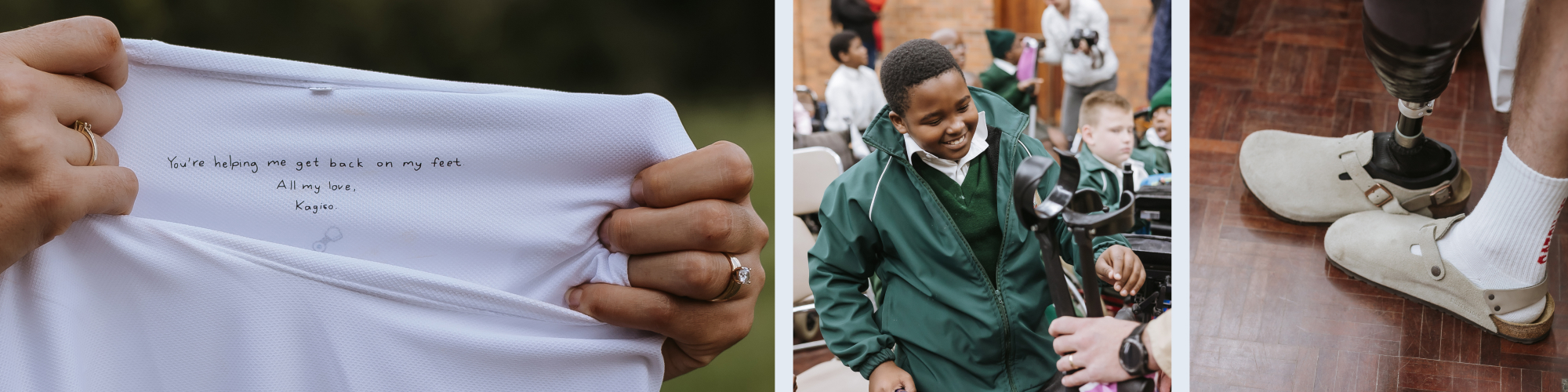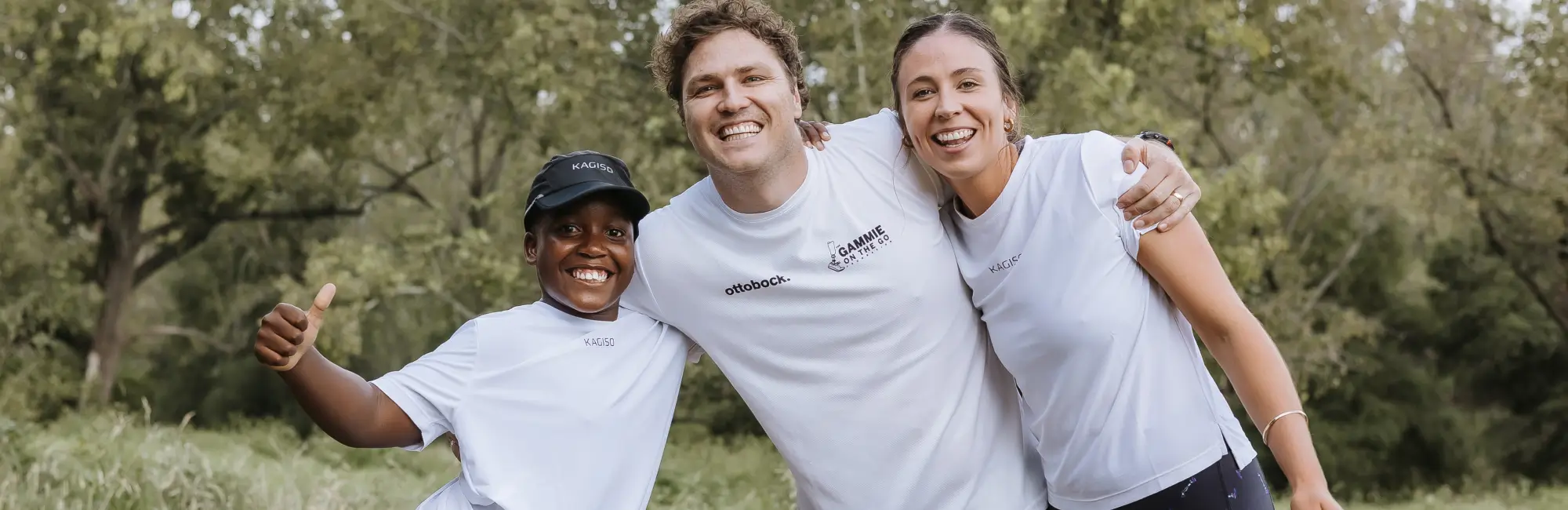
Our Story
The Idea Behind Gammie On The Go
There's a simple idea behind Gammie on the Go.
Movement matters more than people realise. For most, it's something they never have to think about, and that's a gift. But for some of us, it's something we fight for every day. And when you've lived that way, you start to understand how much movement actually shapes a life.
It lives in the ordinary parts of the day. Getting out of bed. Walking into school. Standing long enough to do your job. Playing sport with your friends. Moving through the world without planning every single step.
When that ability changes, life doesn't just get harder. It gets smaller.
I've known that for most of my life. And once you know what that feels like, it's hard not to want to make someone else's life a little bigger.
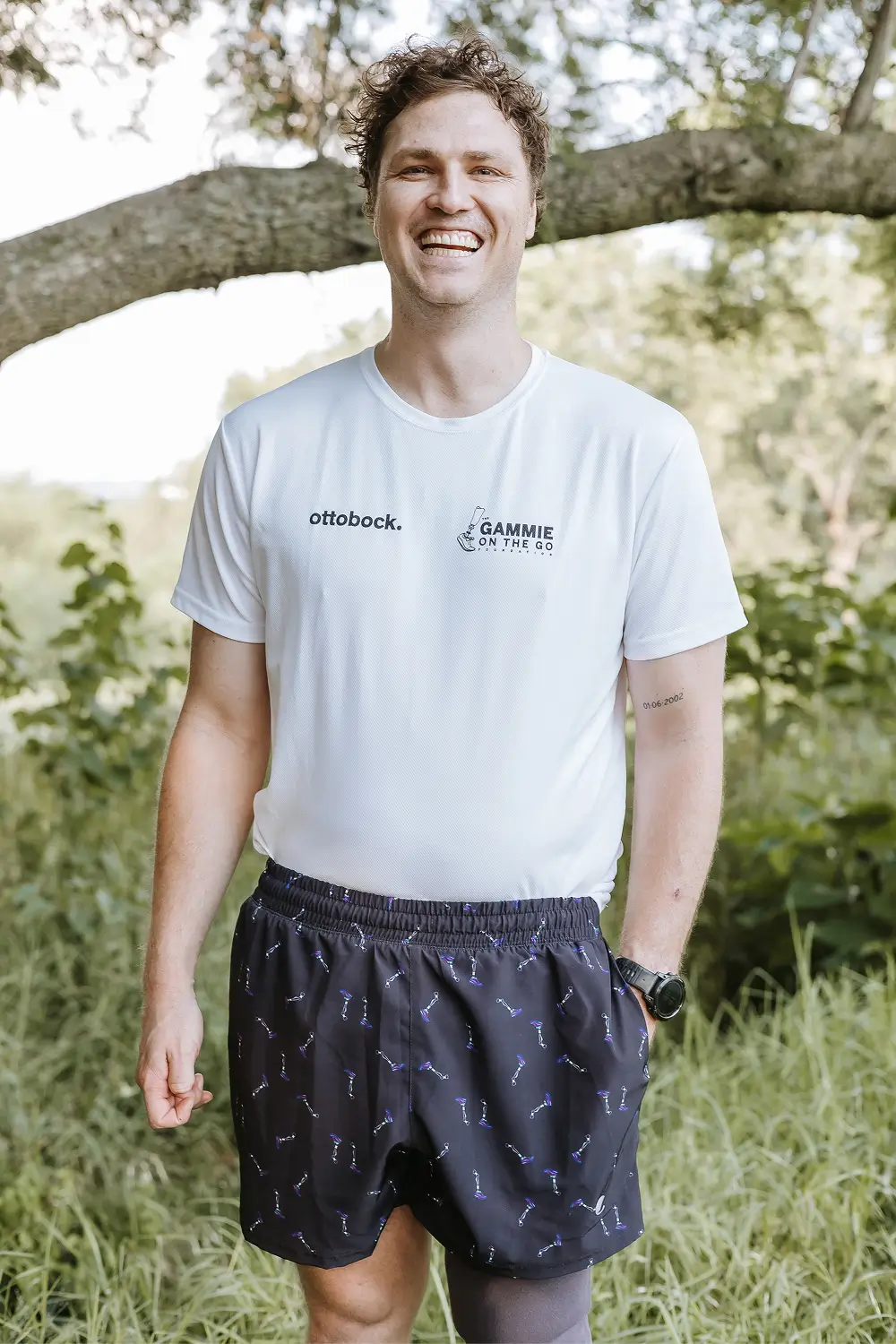
When I was seven years old, I had an accident that changed everything. I cut the back of my knee with glass. I nearly lost my life, and I lost all function in my left foot. No movement. No feeling. A permanent foot drop.
That's where the Gammie foot was born.
From a young age, I’ve always had a deep love for life. I never wanted my disability to decide what I could or couldn’t do. If anything, the accident probably made that part of me stronger.
My Gammie foot became my best friend. I loved him. He was part of me.
I often say that if a genie gave me three wishes, not one of them would be to undo what happened. My accident didn’t happen to me. It happened for me. It gave me a perspective on life that I wouldn’t trade.
But that doesn’t mean it was always easy.
The world isn’t really built around disability. Simple things can become complicated. Some days you push through. Other days your body just won’t cooperate.
For most of my life, I adapted. I figured things out. My foot took me further than I think anyone expected it to.
By 2019, that started to change. The pain got worse, walking became harder and I knew my journey with my Gammie foot probably wasn’t going to last much longer.
Over the next few years came scans, consultations, different opinions and a lot of thinking. At the same time, I was still chasing big things. I wanted to see what my Gammie foot and I could still do together before letting that chapter go. Comrades. Ironman and a cycle from Johannesburg to Cape Town were some of the last few adventures we had together.
On the 9th of September 2025, my 31st birthday, I bid farewell to Gammie and had a below knee amputation
Today, I wear a prosthetic leg built with Ottobock components, but the adapting hasn’t stopped. I’m still learning what works, what doesn’t, and how to keep doing the things I love in a different way.
It hasn’t been a straight line. But I still believe it was the right decision.
And in many ways, I feel like I’m only getting started.
Two Moments That Shaped My Perspective
There were two moments during my school years that changed the way I thought about mobility.
The first was in Grade 9, when I received my first proper custom carbon AFO (Ankle Foot Orthosis). Before that, I had used different orthotics and I was grateful for them, but this felt different.
I put it on and felt the difference almost immediately. Walking felt easier. I had more energy in my step. Things that had felt difficult suddenly felt a little more possible. That was probably the first time I really understood what the right piece of equipment could give someone. Mobility aids aren’t a luxury. They can change the way you experience everyday life.
The second moment came in Grade 10.
I was at the doctor’s rooms and happened to see an invoice being submitted to medical aid. I didn’t understand every detail, but I understood enough to know it was a serious amount of money. And it made me think. I was lucky. I had access to doctors, specialists, orthotics and the equipment I needed.
Even with all of that, living with a disability could still be incredibly hard. So what about a child who didn’t have access to any of it? If it was this hard for me, how hard must it be for someone without the same support? That question stayed with me. Years later, I’d start finding my own answer to it.
How Gammie On The Go Started
In 2022, I signed up for the Comrades Marathon. Ninety kilometres. Against medical advice. Not because it was sensible, but because I needed to know if I could do it. While training, I started sharing the journey on Instagram under the name Gammie on the Go. I was simply showing what it looked like to train and compete with a disability.
People started following along, and somewhere along the way it became bigger than just my own story. After Comrades, I kept going. I cycled from Johannesburg to Cape Town. I completed an Ironman. I hiked the Otter Trail. I ran more marathons. And with each challenge, I started asking how I could use what I was doing to help someone else.
That led to raising money for people who needed mobility equipment.
The same question I’d had as a teenager was still there: if I had access to the right support and things were still difficult, what about the people who didn’t?
Eventually, I realised I wanted to do more than help one person at a time. In 2025, Gammie on the Go became a registered foundation.